
by.
Ir. Loo Chee Kin
Chairman, Fire Advisory Board (FAB) and member in seminar organising committee.
IEM and Malaysian Fire Protection Association (MFPA), with the support of Fire & Rescue Department, held a one-day seminar on 1 September 2026. Officiated by the Director General of Fire & Rescue Department of Malaysia, Dato’ Sri Nor Hisham Mohammad, it was attended by 400 engineers and industry practitioners in the fire safety field. The seminar was on the new Regulations introduced in 2026 under the Fire Service Act 2025 Act A1764 to allow fire industry stakeholders to understand the Regulation implementation details and timelines. Ir. Kim Kek Seong of the IEM media team took the opportunity to hold an interview session with Dato’ Sri Nor Hisham. Present were IEM President Ir. Yau Chau Fong and MFPA President Mr. Tee Siew Chong.
Q: What is the timeline for Bomba to enforce the new Regulations and will there be a transition period for industry players to adapt and make the necessary improvements?
Dato’ Sri Nor Hisham: First, we need to understand that the amendment to the Fire Services Act 1988 (Amendment 2025) involves 7 major areas covering various aspects of fire safety regulation in the country. This includes matters within our direct control, such as the management and regulation of volunteer fire brigades and the fire service welfare fund.
Secondly, we are also enforcing the registration of fire safety consultants and fire safety engineers as well as the registration of “competent persons” regarding the 28 key products we regulate – products utilised in fire safety installations.
For the first time, we are also introducing regulations for Fire Safety Managers (FSM) and Fire Safety Officers (FSO) where we will be mandating the specific appointment of these personnel to oversee systems in buildings which require a Fire Certificate (FC). There are approximately 9,000 buildings in Malaysia that hold an FC.
Finally, we are enforcing the requirement for private fire brigades at large-scale premises, such as those in Pengerang and Gebeng. We need to establish regulations and standards for these requirements. Then there is the question of who should provide training for these individuals. We have amended the Act to introduce regulations that allow us to appoint and oversee training providers. On top of that, we have regulations governing the establishment of fire cadet units and accredited laboratories for testing fire safety equipment.
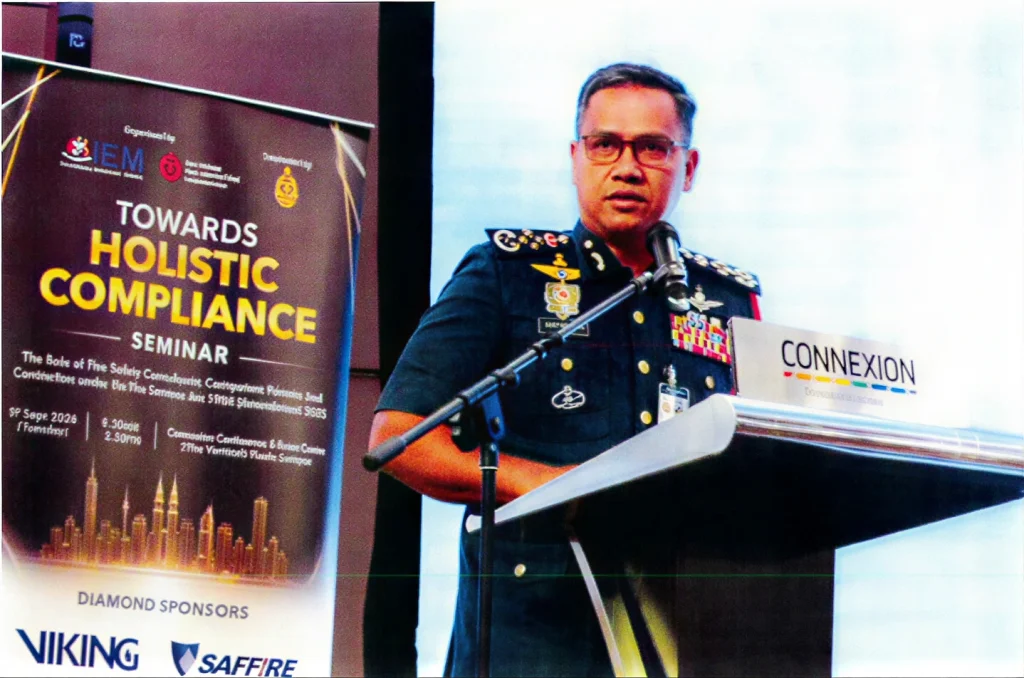
Dato’ Sri Nor Hisham Mohammad, Director General of JBPM, delivering his keynote address at the seminar
The amendment to the Act provides a major one-year transition period for drafting subsidiary regulations-specifically from March 1, 2025, to March 1, 2026. The period from 2026 to 2027 is designated for the transition of regulatory enforcement.
Some regulations are straightforward, such as those for Fire Safety Engineers and Consultants because the numbers involved are small. The Fire Welfare Fund scheme is also proceeding quickly. However, the process for training providers will take longer because we want to ensure the number of appointed providers will be healthy business competition. So far, we have appointed 13 and a second batch will be appointed to meet the demand for FSM and FSO training. In the future, we will be looking into carbon dioxide system installations. At present, everyone claims to be an expert, so we need to implement regulatory oversight.
We have 414 buildings exceeding 150m in height. Evacuation from a height of 150m or more can be quite challenging. Our current by-laws do not mandate dedicated transfer floors, unlike the IBC standards, which require them at specific intervals. However, the system does allow for transfer to lower levels, provided there is a trained and certified lift operator.
The general transition period for the enforcement of these regulations will be until March 2027.
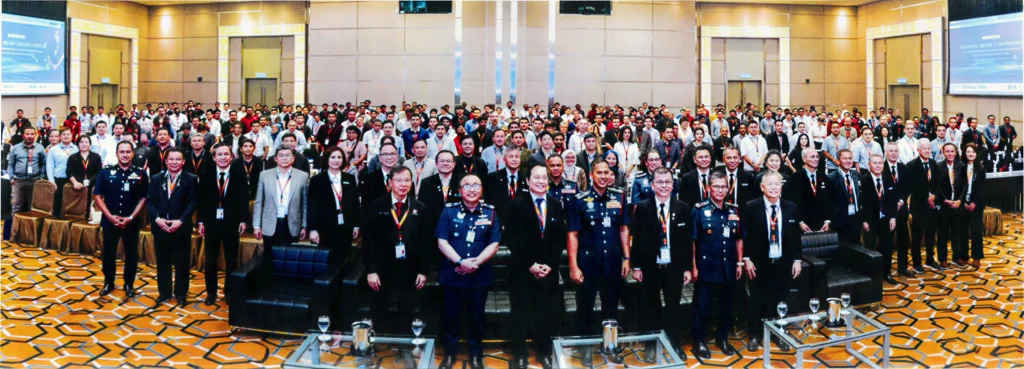
Group photo with participants, speakers and organisers of the Seminar Towards Holistic Compliance held on 1 September 2026 in Kuala Lumpur
Q: What are the challenges in implementing the complete programme within this one-year period?
Dato’ Sri Nor Hisham: For a start, we want to avoid imposing an undue burden on the industry. We do not want the industry to be negatively impacted by training costs or the time staff members will spend in attending courses.
Practicality in the field comes next. Some companies may hold seven Fire Certificates. So, does this necessitate seven FSM and 21 FSO? The Change Management Committee is reviewing this to ensure a practical approach.
Third is career qualification and enhancement. There is collaboration with the Department of Skills Development (JPK), training, and CPD points. These will qualify an individual for assessment leading to SKM (Malaysian Skills Certificate) Level 3, Level 4, and higher certifications.
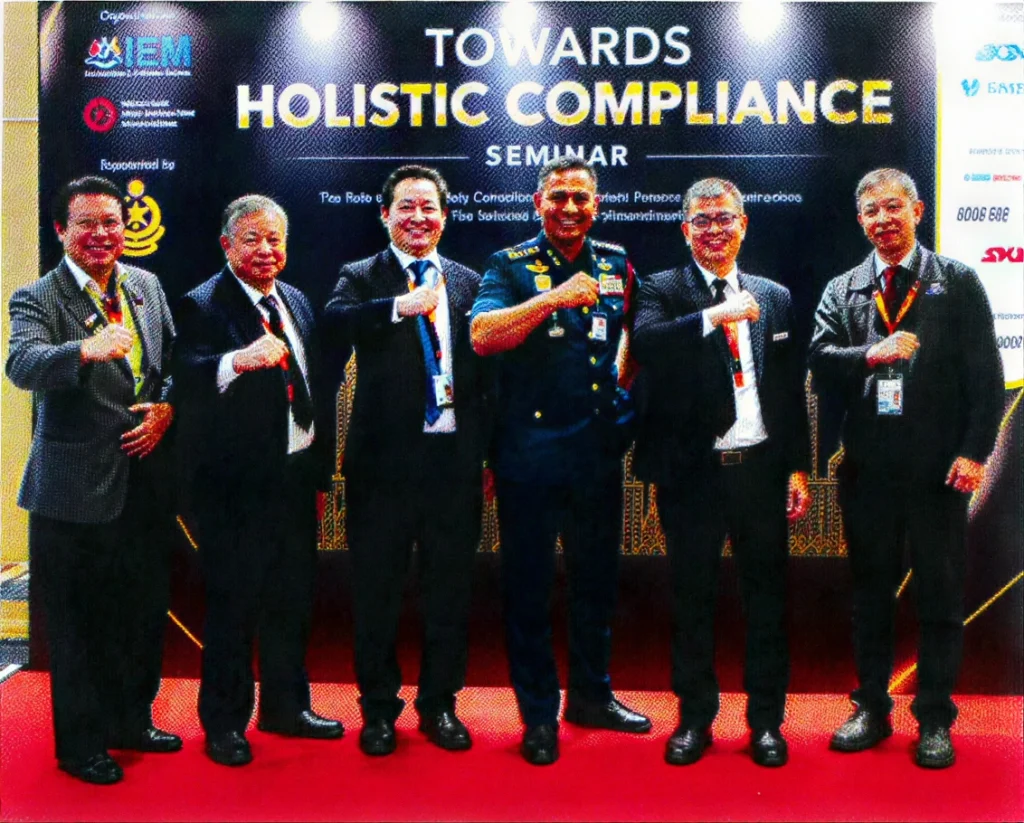
Guest of Honour Dato’ Sri Nor Hisham Mohammad with the Organising Committee. From left: Ir. Dr. Wong Chee Fui (SESIG Chairman), Ir. Dr. Hee Choi (Organising Chairman), Ir. Yau Chau Fong (IEM President). Dato’ Sri Nor Hisham Mohammad (Guest of Honour), Mr. Tee Siew Chong (MFPA President). and Ir. Loo Chee Kin (Organising Committee)
Q: What are the roles of the Fire Safety Organisation (OKK) and appointing a Fire Safety Manager and Fire Safety Officer?
Dato’ Sri Nor Hisham: The requirements for establishing an OKK and appointing FSM and FSO have actually been in place under the Fire Services (Fire Certificate) (Amendment) Regulations 2020.
Therefore, 2027 is not the year for OKK, FSM, and FSO to be introduced but rather, it is an important period to ensure more comprehensive compliance. Owners of premises and the management are expected to ensure their OKK is properly established and functional (including the appointment of certified FSMs and FSOs), as well as having the relevant fire safety plans and reports.
What we want is for OKK to go beyond documentation and function as a first responder within the premises. FSMS and FSOs must be competent and capable of taking early action to protect occupants while waiting for the Fire & Rescue Department to arrive.
Q: Will there be new talent opportunities for the role of FSM, and what kind of training or career path is available for someone in FSM?
Dato’ Sri Nor Hisham: We see strong potential for the FSM to develop into a specialised career in fire safety management. This can create a more structured career ecosystem, particularly in sectors such as hospitals, hotels, offices, factories, shopping centres, places of assembly, and other designated premises.
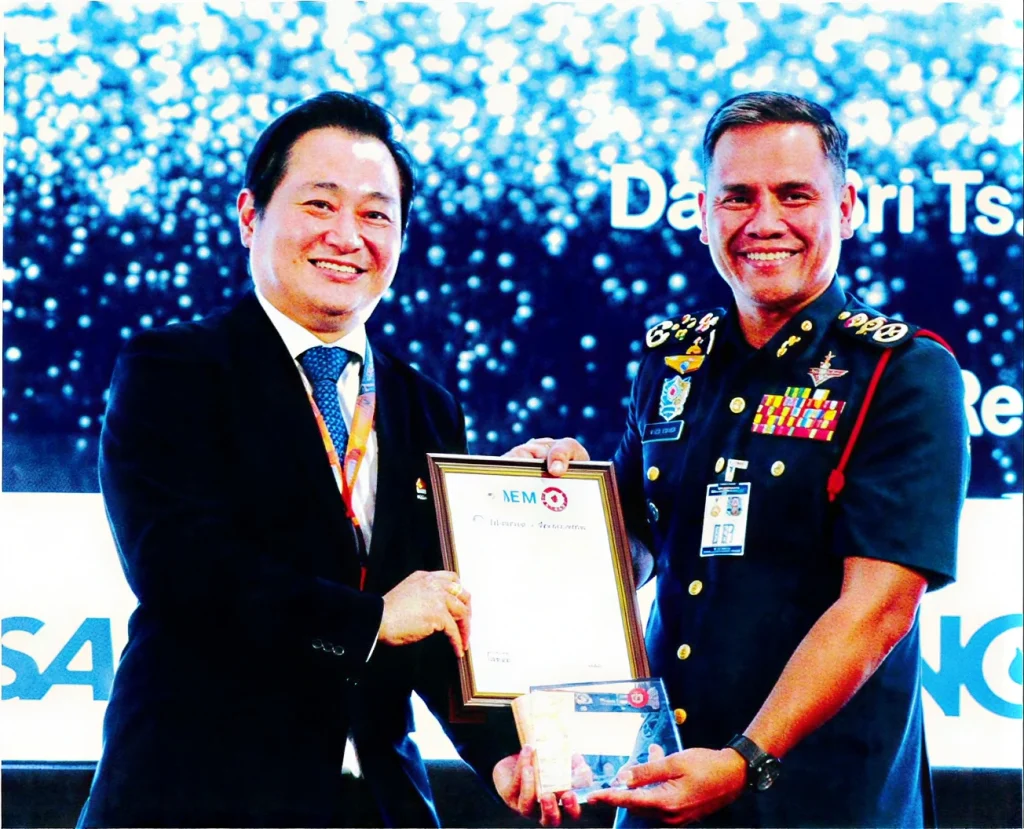
Token of Appreciation by IEM – IEM President, Ir. Yau Chau Fong, presenting a token of appreciation to the Guest of Honour, YAS Dato’ Sri Ts. Nor Hisham Bin Mohammad, Director General of JBPM
In terms of professional development, the pathway will involve training, assessment, and accreditation as prescribed by JBPM. FSMS need to be more than just title holders. They must have the knowledge and competency to manage fire risks, oversee fire safety systems, ensure emergency preparedness, and support compliance at their premises. This is also in line with the concept of self- regulation, where premises must have the capability to identify risks, take early action, and ensure their fire safety systems remain operational.
Q: Will there be a transition period for existing fire contractor firms to meet the requirements of the Regulations? Will there be a pathway for technicians and engineers in fire contractor firms to upskill themselves?
Dato’ Sri Nor Hisham: Yes. A reasonable transition period is provided from February 2026 to December 2026 to allow existing fire contractor firms to adapt their operations, fulfil registration requirements and enhance the competency of their personnel.
For technicians and engineers already working in the industry, there will be an upskilling pathway involving training, relevant work experience and compliance with the prescribed criteria to obtain recognition as a Competent Person (CP). The intention is not to disregard existing experience but to strengthen it with clearer competency requirements and standards.
Q: What will be the entry requirements for a new company intending to become a fire contractor?
Dato’ Sri Nor Hisham: A new company intending to undertake fire safety works will need to fulfil registration requirements and criteria prescribed under the Regulations. This includes having recognised competent personnel, the necessary technical capabilities, and meeting the relevant organisational and operational requirements. The key principle is that a company should not be simply registered as a contractor. It must have the capability and competency to carry out fire safety works safely, professionally, and responsibly.
We are not trying to make it difficult for new players to enter the industry. What we want is to ensure that anyone entrusted with fire safety responsibilities has the competency to carry out that responsibility.
Q: What are the benefits for owners of premises under these new Regulations?
Dato’ Sri Nor Hisham: The biggest benefit will be a higher level of fire safety and greater confidence among premises owners that their fire safety systems are properly managed.
With the registration of Competent Persons, Fire Safety Contractors, Fire Safety Consultants, and Fire Safety Organisations, responsibilities become clearer and fire safety management will no longer depend entirely on inspections by JBPM. For designated premises, the establishment of an OKK comprising FSMS and FSOS also strengthens the concept of self-managed fire safety.
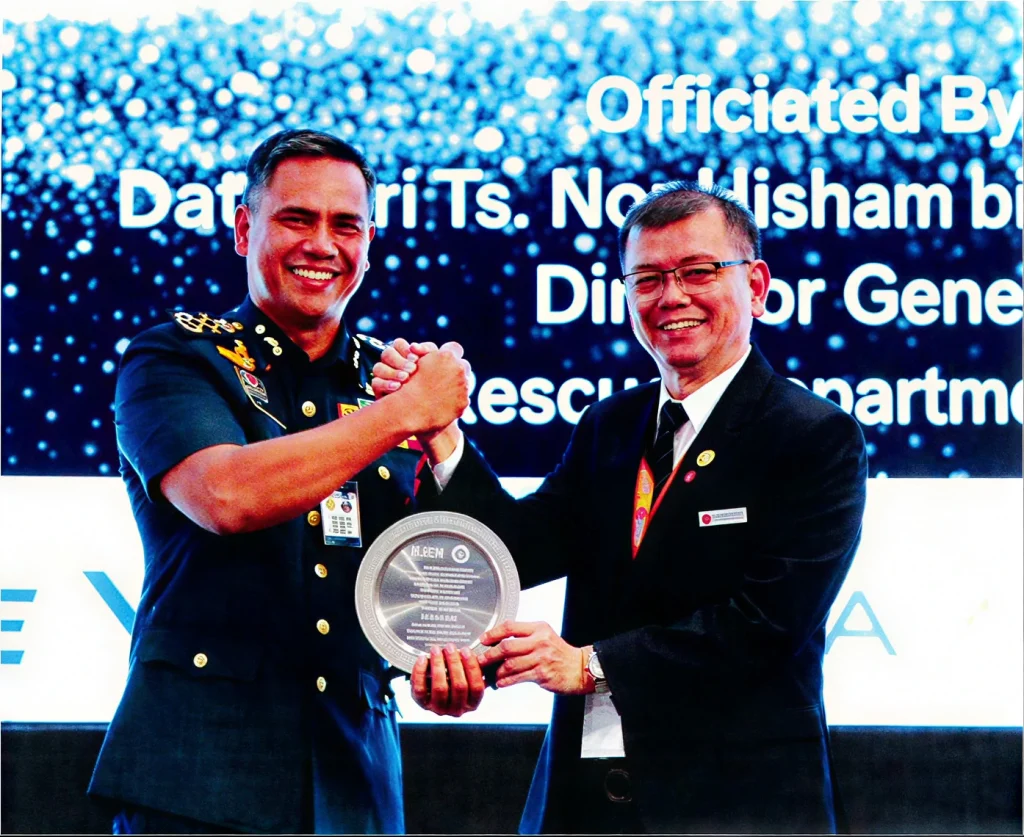
Appreciation Plaque by MFPA – MFPA President, Ts. Tee Siew Chong, presenting an appreciation plaque to the Guest of Honour, YAS Dato’ Sri Ts. Nor Hisham Bin Mohammad, Director General of JBPM
There are three key benefits: Prevention, preparedness and accountability. Risks can be identified earlier while premises management and occupants will have a clearer structure for response during an emergency, and there will be competent individuals with clearly defined responsibilities for fire safety.
Ultimately, we want to move from a mindset of “waiting for Bomba to arrive” to one where the occupants of the premises are capable of identifying risks and taking early action before Bomba arrives.
Q: Is there any projected cost difference if a premises owner engages or uses Firefighting Equipment and Fire Safety Installations Certified Person for Fire Safety Installation (CPFSI)?
Dato’ Sri Nor Hisham: Certified Person for Fire Safety Installation (CPFSI) is a registered individual responsible for registering fire safety equipment and installations (KMK/ PKK) for product approval through the e-Premis system. The CPFSI is not involved in the maintenance of KMK/PKK within buildings.
However, if the premises owner is referring to a Competent Person for Fire Safety Contractor (CPFSC), they may engage a registered Fire Safety Contractor (FSC) firm. The premises owner does not engage the CPFSC directly. At present, there is no projected difference in cost as this will depend on the type and design of the KMK/PKK systems and these may vary.
Q: How will Fire Safety Consultants be able to improve fire safety for the public and the community going forward?
Dato’ Sri Nor Hisham: Fire Safety Consultants are not new. They have long worked with JBPM, particularly in areas such as fire safety engineering, risk assessment, and fire safety design. What has changed is that their role will now be more structured and regulated under the Fire Services Act 1988 [Act 341] and the Fire Services (Fire Safety Consultant and Fire Safety Consultant Firm) Regulations 2026.
Their expertise helps to ensure fire safety designs and systems are appropriate to the actual level of risk, particularly for complex developments or facilities with specialised hazards. For the public and the community, the benefit is that fire safety can be addressed much earlier at the design and development stage rather than when an emergency actually occurs. With competent and regulated consultants, we can strengthen the country’s fire safety ecosystem in a more professional, effective, and comprehensive manner.
Q: Is the timeframe the same and are there staffing constraints on the part of the Fire & Rescue Department?
Dato’ Sri Nor Hisham: Digital systems such as e-Premis have helped greatly to streamline the registration process and ease the workload of staff members. Previous enforcement measures were largely administrative, such as suspending or revoking certificates without severe penalties. With these amendments, legal action and fines can now be imposed.
An “Open Door” approach: The Department is always open to getting industry feedback and resolving issues transparently.
Enforcement will be carried out nationwide, not just in Kuala Lumpur or Putrajaya. Close collaboration with industry associations, such as IEM, MFPA, etc., ensures that Malaysian products and contractors meet international standards and quality.
Conclusion
The organising committee would like to extend a big thank you to Dato’ Sri Nor Hisham, the speakers, moderators, and sponsors for making the event a success and to the IEM Excom, executives, and volunteers from the Mechanical Engineering Technical Division (METD), Safety In Engineering Special Interest Group (SESIG), and Fire Advisory Board (FAB).